Time Travelers Wanted: Exploring the Ancient Ruins of Mainland Greece
There are trips that entertain, and there are trips that transport. A journey through mainland Greece is most definitely the latter. Over just seven days, this itinerary peels back the layers of Western civilization, inviting you to walk where oracles whispered prophecies, philosophers taught in olive groves, and kings ruled fortified hilltops.
If you’re someone who leans toward cultural immersion over beach lounging, this route through Athens, Peloponnese, Delphi, and Meteora is designed for you. It’s the first week of a two-week trip, but it stands strongly on its own—a complete, compact time machine spanning 3,000 years of history.
Let’s dive into the itinerary and discover why Greece’s mainland often outshines its famed islands—at least when it comes to soul-stirring encounters with the past.
Day 1: Ancient Athens Begins in Monastiraki
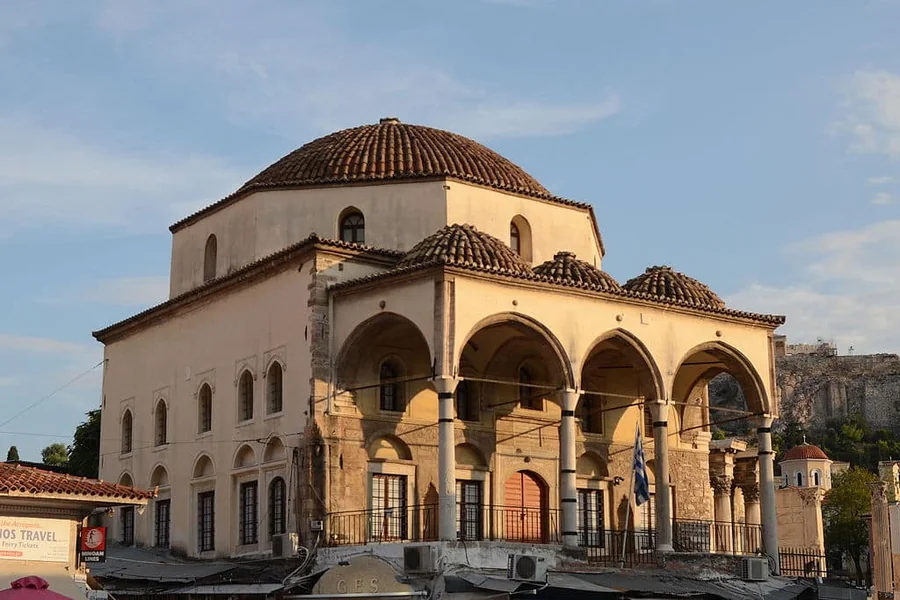
Landing in Athens is like being dropped into the heart of an open-air museum. The Monastiraki neighborhood, where we based ourselves, buzzes with energy. Flea markets line cobbled streets, street musicians play rebetiko, and antiquity is never more than a few steps away.
We kicked off our trip with visits to Hadrian’s Library and the Roman Agora—both included in the very handy combo ticket that also covers five other archaeological sites: the Acropolis, Ancient Agora, Aristotle’s Lyceum, Olympieion, and Kerameikos.
In the afternoon, we caught the ceremonial guard march at Syntagma Square before heading to our apartment with a view of the Acropolis. And the evening? A golden-hour taxi ride up Lycabettus Hill for sweeping views and dinner at Orizontes, perched high above the city.
Day 2: Tasting Athens, Then Touching the Gods
We started day two with a food tour through Plaka, courtesy of Culinary Backstreets. Breakfast included koulouri, a visit to a bakery, a cheese tasting, and the best souvlaki in Athens. The tour was more than just eating; our guide Natalie shared local life insights, urban challenges, and even asked about India with genuine curiosity. Two lunches later, we waddled home for a nap.
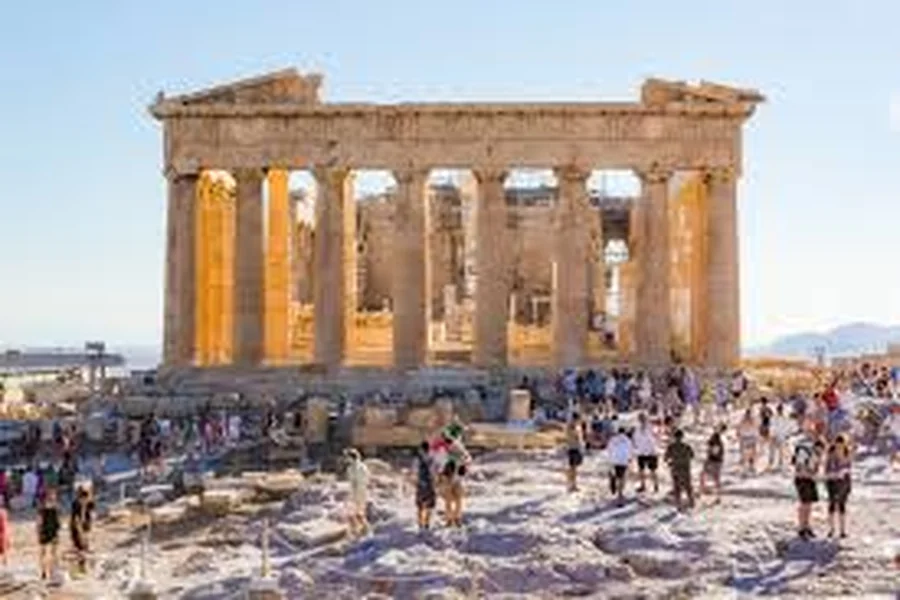
Come early evening, we made our long-awaited visit to the Acropolis. The Parthenon’s pillars glowed against the fading sun. We stood in awe at the Temple of Athena and sat in silence at the Odeon of Herodes. It was crowded, yes, but visiting in the cooler twilight made everything feel more magical and less rushed.
Day 3: Museums, Columns, and Quiet Cemeteries
With most tourists still sleeping, we strolled through the Ancient Agora in peace. Then we hopped on the metro to Kolonaki to explore Aristotle’s Lyceum. While not the most visually impressive site, it mattered deeply to our daughter, who is enamored with classical philosophy.
In the afternoon, we explored the Olympieion, where only 15 of the original 104 columns remain standing—stark, skeletal reminders of a once-massive temple. The Acropolis Museum followed, a necessary companion to the ruins. With three floors of artifacts, it’s worth every minute, even if you’re not a history buff.
Our final stop was the Kerameikos cemetery. Tired but fulfilled, we ended the day quietly, watching the sun dip behind marble stones.
Day 4: Peloponnese—A Day Trip Through Time
Early in the morning, we boarded a bus for the Peloponnese. First stop: the Corinth Canal, a marvel of engineering slicing through rock to separate the peninsula from the mainland.
Epidaurus was next. Its amphitheatre, dating from the 4th century BC, has acoustics so precise that a whisper on stage can be heard at the top rows. It still hosts performances every summer.
Lunch was in Nafplio, a coastal town that once served as Greece’s capital. Venetian, Byzantine, and Ottoman influences can be seen in every alleyway and balcony. Then came Mycenae, a Bronze Age kingdom described as “the greatest and richest around 1350 B.C.” We passed through the Lion Gate and entered tombs of Agamemnon and Clytemnestra—names once thought myth, now etched in stone.
Day 5: Delphi’s Oracle and a Mountain Drive to Meteora
We kicked off our trip with visits to Hadrian’s Library and the Roman Agora—both included in the very handy combo ticket that also covers five other archaeological sites: the Acropolis, Ancient Agora, Aristotle’s Lyceum, Olympieion, and Kerameikos.
In the afternoon, we caught the ceremonial guard march at Syntagma Square before heading to our apartment with a view of the Acropolis. If you’re looking for a quiet and scenic place near the center, apartments villa effie can be a great base for exploring Athens on foot.
Set against a backdrop of dramatic mountains, Delphi offers both ruins and a museum. It was busy by midday, so we recommend arriving early if possible. After an hour and a half wandering the site and galleries, we enjoyed lunch in Delphi town before continuing on winding roads to Kalambaka, the gateway to Meteora.
Day 6: Meteora’s Monastic Magic
If one place stole the show, it was Meteora. Imagine 190 vertical rock pillars with ancient monasteries balanced precariously atop them—six of which are still active today.
In the morning, we joined a guided hike with Visit Meteora up to the Great Meteoron Monastery. Modest dress is required, and tickets must be purchased in cash, but everything is easily arranged.
Later that evening, I took an E-bike tour that passed all six monasteries and ended with a view of the sunset over the valley. My husband and daughter opted for an ATV adventure, and we reconvened in Kalambaka for a hearty mountain meal.
For those with time, this region deserves 3–4 days. Hiking, climbing, and cycling here are world-class.
Day 7: Farewell to the Mainland
We drove back to Athens, returned the rental car, and made our way to Piraeus Port to catch a ferry to the islands—another chapter, another pace.
Travel Tips from the Road
Avoid traveling in July and August unless you love scorching heat. May was ideal—warm but bearable, especially in Meteora. September and October are great alternatives, while November through March offers crowd-free access (though many island destinations close for the season).
If you’re short on time, skip the Peloponnese for a 6-day version or focus on Athens and Meteora for a tight 5-day route. And if Meteora captures your heart like it did ours, don’t hesitate to stay longer.