
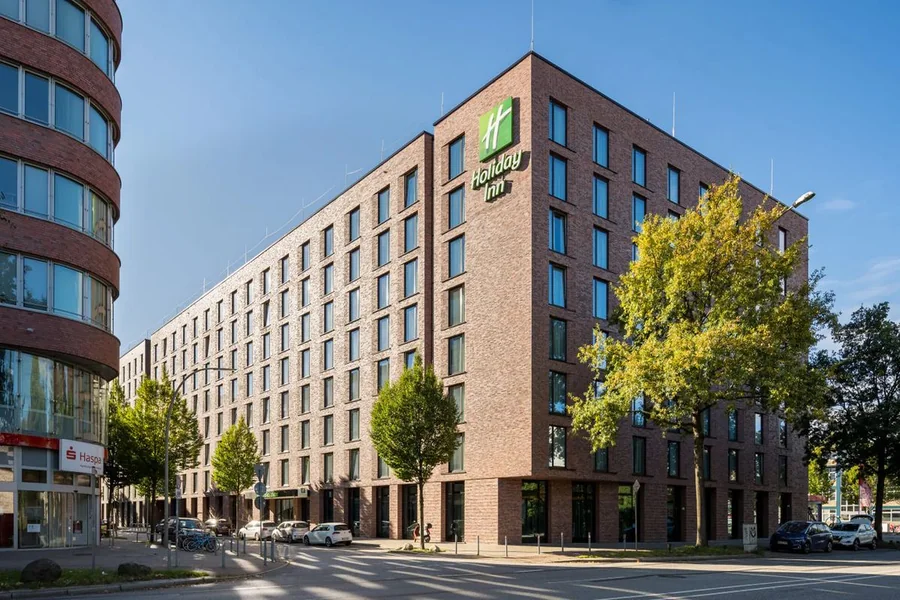
Clinker Bricks for External Walls – Why This Ancient Material Remains a Top Choice in Modern Architecture
Few building materials can claim a history as long and as consistently successful as clinker brick. Used in construction for centuries across Northern Europe, Scandinavia and the Baltic region, clinker has outlasted dozens of competing facade materials that rose to popularity and faded – while clinker remained. Today, it appears on the facades of listed historic buildings and on award-winning contemporary architecture alike, a material that has never needed reinvention because it was engineered correctly from the beginning.What makes
clinker different from standard ceramic brick?
The defining characteristic of clinker bricks is the firing temperature. Standard ceramic building products are fired at temperatures between 900 and 1050 degrees Celsius. Clinker is fired at temperatures exceeding 1100 degrees, sometimes reaching 1200 degrees or higher. At these temperatures, the ceramic mass undergoes vitrification – a process in which the silicates in the clay partially melt and fuse, filling the pore structure of the material and creating a dense, almost non-porous matrix.
The practical result of this process is a material with water absorption typically below 6 percent, and in premium products below 2 percent. This low absorption is the foundation of clinker’s exceptional frost resistance – water that cannot enter the material cannot freeze inside it and cannot cause the freeze-thaw damage that destroys lower-quality masonry over time. In climates with harsh winters and repeated freeze-thaw cycles, this property is not merely desirable – it is essential for long-term facade integrity.
How does clinker compare to other premium facade materials?
The market for premium facade materials is competitive, and clinker sits alongside natural stone, high-specification render systems, fiber cement panels and large-format porcelain as options considered by architects and developers seeking longevity and quality. Each has its strengths, but clinker holds a particular combination of advantages that few materials can match simultaneously.
Unlike natural stone, clinker is a manufactured product with consistent quality control and precise dimensional tolerances. Unlike render systems, clinker requires no periodic repainting or resurfacing – the material at installation is the material that will face the elements fifty years later. Unlike fiber cement, clinker has no organic component that can deteriorate, swell or delaminate over time. Unlike large-format porcelain, clinker integrates naturally into traditional masonry detailing and can be used for structural as well as cladding applications.
The color stability of clinker deserves particular emphasis. The colors of clinker – from warm reds and oranges through buff and cream to cool greys and near-blacks – are mineral colors formed during firing and running through the full depth of the material. They cannot fade, chalk or peel. An untreated clinker facade in a protected location will look essentially the same after thirty years as it did at installation, requiring nothing more than occasional cleaning.
What aesthetic possibilities does clinker offer contemporary architects?
The architectural vocabulary of clinker has expanded considerably beyond its traditional associations with Northern European red-brick construction. Contemporary clinker production offers a remarkable range of colors, surface textures and formats that make it a genuinely flexible material for modern architectural expression.
Surface textures range from smooth and sanded through rough-split and wire-cut to deliberately irregular hand-formed effects. Each texture has different visual and practical properties – smooth surfaces reflect light evenly and are easily cleaned, while textured surfaces create shadow play across the facade and are more forgiving of weathering and minor soiling. The choice of texture has as much influence on the character of the finished building as the choice of color.
Format variety has also increased significantly. Beyond the traditional full-depth brick, clinker is available as thin cladding slips for lightweight facade applications, as large-format panels, and as specialist profiles for cornices, sills, copings and other architectural details. This versatility allows architects to achieve the material quality and visual character of clinker while adapting to the structural and dimensional requirements of contemporary construction.
How does clinker perform on modern high-performance building envelopes?
Contemporary construction demands that facades do more than simply look good and resist weather. Energy efficiency regulations, thermal bridging requirements and building physics considerations mean that facade systems must integrate with insulation layers, vapor control membranes and airtightness systems in ways that were rarely considered when traditional brick construction was the norm.
Clinker cladding systems have evolved to meet these demands. Clinker slips applied over insulated substrates allow the thermal performance of a well-insulated modern building envelope to be combined with the aesthetic quality and durability of natural clinker on the exterior surface. Properly detailed, such systems can achieve very low thermal transmittance values while presenting a facade surface that is indistinguishable in appearance from traditional masonry.
The key to successful integration of clinker into modern building envelopes is careful detailing at junctions, penetrations and movement joints. Clinker’s dimensional stability under temperature variation is excellent, but thermal movement in the substrate must be accommodated by correctly positioned expansion joints to prevent cracking or debonding of the cladding layer.
What should specifiers consider when selecting clinker for a project?
Technical specification of clinker for facade applications should begin with the relevant European standards – EN 771-1 for clay masonry units covers the key performance parameters including water absorption, frost resistance classification and dimensional tolerances. Products tested and certified to these standards offer a documented performance baseline that allows meaningful comparison between suppliers.
Beyond the technical specification, the relationship between clinker color, mortar joint color and the wider palette of the building is the most important aesthetic decision in any clinker facade project. The mortar joint is a significant visual element – typically occupying ten to fifteen percent of the visible facade surface – and its color has an enormous influence on the overall character of the finished work. Light mortar joints emphasize the individual unit and create visual rhythm across the surface; dark mortar joints that closely match the clinker color create a more monolithic, unified appearance.
The scale of the masonry unit relative to the scale of the building is equally important. Fine-format bricks on a large building can appear fussy and over-detailed; large-format units on a small building can overwhelm the composition. The most successful clinker facades are those where the proportional relationship between unit, joint, window opening and overall massing has been considered as an integral part of the architectural design rather than as a material choice made independently of it.


